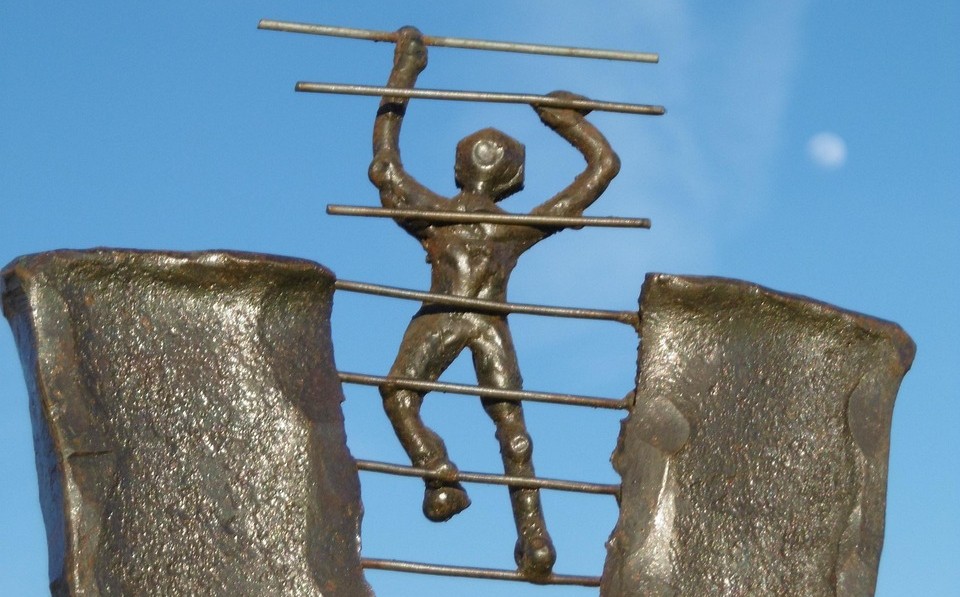
Power is often spoken of as something people have:
A resource. A position. An advantage.
Civilism approaches power differently.
Power is not simply possessed.
It is exercised within relationships.
To understand power, we must look less at who holds it and more at what it does to the human spirit when it moves through a system.
The Idea in Context
Power emerges wherever humans organize themselves.
Any group that coordinates effort—families, tribes, institutions, states—produces power differences. Someone decides. Someone enforces. Someone benefits. Someone bears the cost.
Historically, power has been necessary for:
- coordination
- protection
- decision-making
- collective survival
Power did not arise because humans desired dominance.
It arose because cooperation requires structure.
But once power exists, it rarely remains neutral.
What Power Offers
Power offers order.
It reduces uncertainty by:
- clarifying authority
- enforcing norms
- accelerating action
- stabilizing systems
When exercised responsibly, power can protect the vulnerable, restrain harm, and enable large-scale cooperation that no individual could achieve alone.
From a human perspective, power often feels like safety.
This is why people tolerate power—even unequal power—when it appears to serve collective stability.
What Power Costs
Power always extracts a price.
As power concentrates, it tends to:
- distance decision-makers from consequences
- normalize hierarchy
- reduce empathy across roles
- discourage dissent
Unchecked power narrows perception. It begins to treat people as functions rather than persons, and outcomes as metrics rather than lived realities.
The cost of power is not authority itself.
It is disconnection from human consequence.
When power stops feeling the effects of its decisions, it becomes brittle—and eventually cruel.
A Civilist Reading
From a Civilist perspective, power is not judged by its justification, but by its relational impact.
Civilism asks:
- How does power shape dignity?
- Who absorbs its failures?
- Who is allowed to question it?
- How close does it remain to lived experience?
Power becomes dangerous not when it exists, but when it becomes self-referential—answering only to itself.
Civilism does not reject power.
It insists that power remain answerable to the human spirit.
What Remains Worth Holding
Power can remain humane when it is:
- limited
- distributed
- transparent
- responsive to feedback
Power that stays close to consequence retains flexibility.
Power that listens remains adaptive.
Civilism does not imagine a world without power.
It imagines a world where power remembers what it is for.
A Quiet Closing
Power will always exist wherever humans live together.
The question is not how to eliminate it,
but whether it will remain connected to the humans it shapes.
Some power organizes life.
Some power erodes it.
A Civilist Lens exists to notice the difference—not to accuse, not to excuse, but to keep human consequence in view.
Power reveals itself most clearly in how it treats those who cannot return it.