The Human Spirit Is Not Divine — It Is Human
A New Way to Understand Spirit Without Religion or Supernaturalism
For most of history, spirit was described as something that arrived from above —
a divine spark placed in us by a higher power,
a piece of heaven located somewhere behind the ribs,
a sacred essence belonging not to humanity but to the gods.
This idea shaped cultures, rituals, and entire civilizations.
It brought comfort to many, fear to some, and confusion to others.
But above all, it created the assumption that meaning must flow downward,
from the divine realm into the human one.
Yet when we look closely — honestly, humbly —
we discover that the qualities people once attributed to the divine
are found right here in us.
Consciousness.
Empathy.
Love.
Resilience.
Imagination.
Curiosity.
Creation.
Awareness.
Choice.
These are not divine gifts.
These are human capacities.
The essence we once projected upward
has been living in us all along.
Spirit Has Always Been Human — We Just Didn’t Have the Language
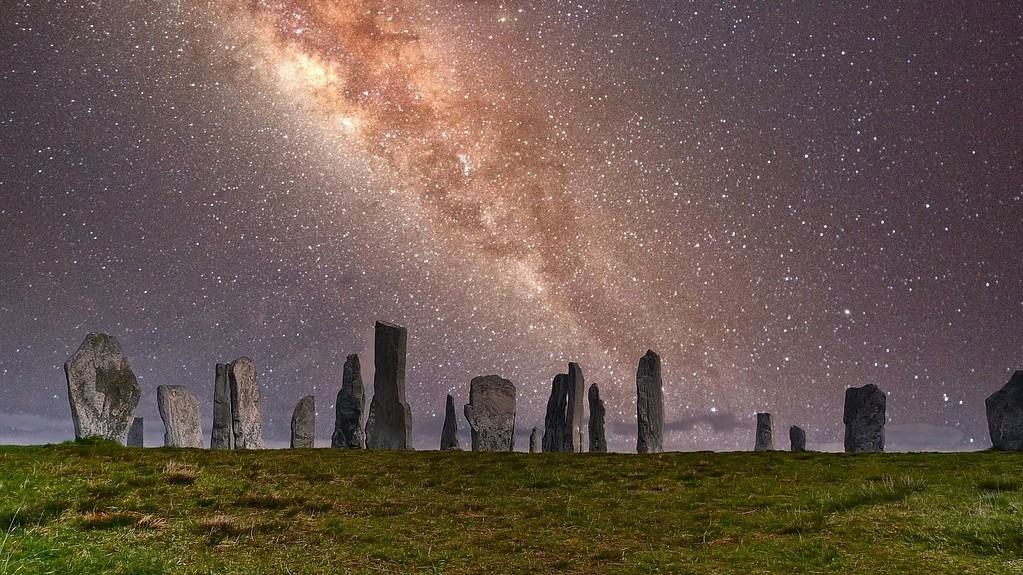
When ancient peoples felt awe beneath a night sky,
they didn’t have astronomy.
They had myth.
When they felt empathy for a stranger,
they didn’t have psychology.
They had parables.
When they felt grief, hope, longing, courage, or wonder,
they didn’t have the sciences of mind, culture, and evolution.
They had religion to explain what they could not yet understand.
Spirit was never divine.
It was misunderstood humanity.
It was the depth of our consciousness
projected onto the heavens.
It was the strength of our resilience
imagined as supernatural intervention.
It was the power of our shared human story
written as the will of gods.
Divine spirit was an early attempt
to explain the Human Spirit
before we had the knowledge to recognize it for what it was.
The Civilist View: Spirit Is the Natural Expression of Being Human
In Civilism, “spirit” is not something supernatural.
It is the total experience of being human, expressed in three dimensions:
1. The Inner Spirit
Your consciousness, identity, self-awareness, inner life —
the “I” within you.
2. The Social Spirit
Your relationships, connections, empathy, compassion —
the “we” between us.
3. The Collective Spirit
Our collective energy as a species —
the creativity, morality, and progress that rise from us all.
There is nothing mystical here,
yet everything is meaningful.
There is nothing supernatural here,
yet everything feels sacred.
Spirit does not need to violate nature
to feel powerful.
It simply needs to be understood.
We Do Not Need a Divine Spirit to Feel Whole
The idea that goodness, meaning, morality, purpose, or empathy
must be given by a god
has always diminished the truth of who we are.
We do not need divine origins
to experience profound love.
We do not need divine oversight
to care for one another.
We do not need divine commandments
to know when something is wrong.
We do not need divine promises
to seek a better world.
Our conscience is enough.
Our connection is enough.
Our curiosity is enough.
Our compassion is enough.
Our humanity is enough.
The Human Spirit needs no external validation.
It generates its own.
Why Letting Go of “Divine Spirit” Heals the Human Spirit
For many, the divine model created real wounds:
- the belief that we are “fallen”
- the belief that we are unworthy
- the belief that morality requires fear
- the belief that goodness is borrowed, not innate
- the belief that humanity is incapable without divinity
These ideas shrink the Human Spirit.
They teach us to distrust ourselves.
They tell us to look upward for what has been within us the whole time.
Civilism offers a different story —
one that restores dignity where doctrine once created dependence.
In this new story:
- we are not fallen; we are evolving
- we are not unworthy; we are unfinished
- we are not depraved; we are adaptive
- we are not empty; we are conscious
- we are not separate; we are interconnected
When we let go of the belief that spirit must be divine,
we finally make space
for the Human Spirit to breathe.
The Human Spirit Is Physical, Emotional, Social, Psychological, and Creative
Not magical.
Not otherworldly.
Not supernatural.
It is rooted in:
- the brain’s ability to create awareness
- the heart’s capacity for compassion
- the body’s wiring for connection
- the mind’s hunger for meaning
- the species’ drive to evolve
- the community’s ability to shape belonging
- the planet’s influence on our behavior
Your spirit is not a foreign object placed inside you.
It is you — expressed in all your dimensions.
And the collective Human Spirit
is us — expressed in the way we treat one another,
in the societies we build,
and in the futures we imagine.
This is not a lesser spirituality.
It is a truer one.
When Spirit Comes Down to Earth, Humanity Rises
The beauty of embracing a human-centered spirit
is that it frees us from waiting for meaning
and empowers us to make meaning.
It frees us from the fear of disappointing invisible beings
and allows us to live fully for one another.
It frees us from rigid doctrine
and gives us the freedom to evolve.
It frees us from guilt
and replaces it with responsibility.
It frees us from inherited explanations
and replaces them with understanding.
When spirit comes down to earth,
everything rises:
- dignity
- clarity
- compassion
- empathy
- justice
- reason
- belonging
- humanity
This is what happens when we stop looking “up”
and start looking within, between, and among us.
This Is Where Your Journey Begins
In this chapter, you stepped into the first key truth:
Spirit is not divine — it is human.
This realization does not diminish spirituality.
It liberates it.
It does not reduce meaning.
It clarifies it.
It does not reject the past.
It simply refuses to be confined by it.
You are not learning a lesser version of spirit.
You are reclaiming the original one —
the one that has always lived in you,
long before anyone told you where it must come from
or whom it must serve.
This is the beginning of a new understanding of yourself
and a new understanding of what it means to be human.